A Decade of Sustainability: 2016–Now, and What Comes Next?
In sustainability circles, one story often dominates: “We aren’t doing enough.”
That phrase packs both urgency and frustration, and rightly so, but it also obscures a quieter truth: dramatic, measurable progress HAS already been made.
Amid the current wave of nostalgia comparing today with ten years ago, it’s worth asking the same question of sustainability, just how much has changed since 2016? A lot of us weren’t in sustainability ten years ago, so even when change feels slow, it’s worth celebrating how far the sector has already moved.
Once niche and marginalised, sustainability is now embedded in energy systems, corporate strategy, labour markets, and public policy.
So, while continued action is essential, looking back at the progress already made offers an optimistic lens on what the next ten years of momentum could achieve.
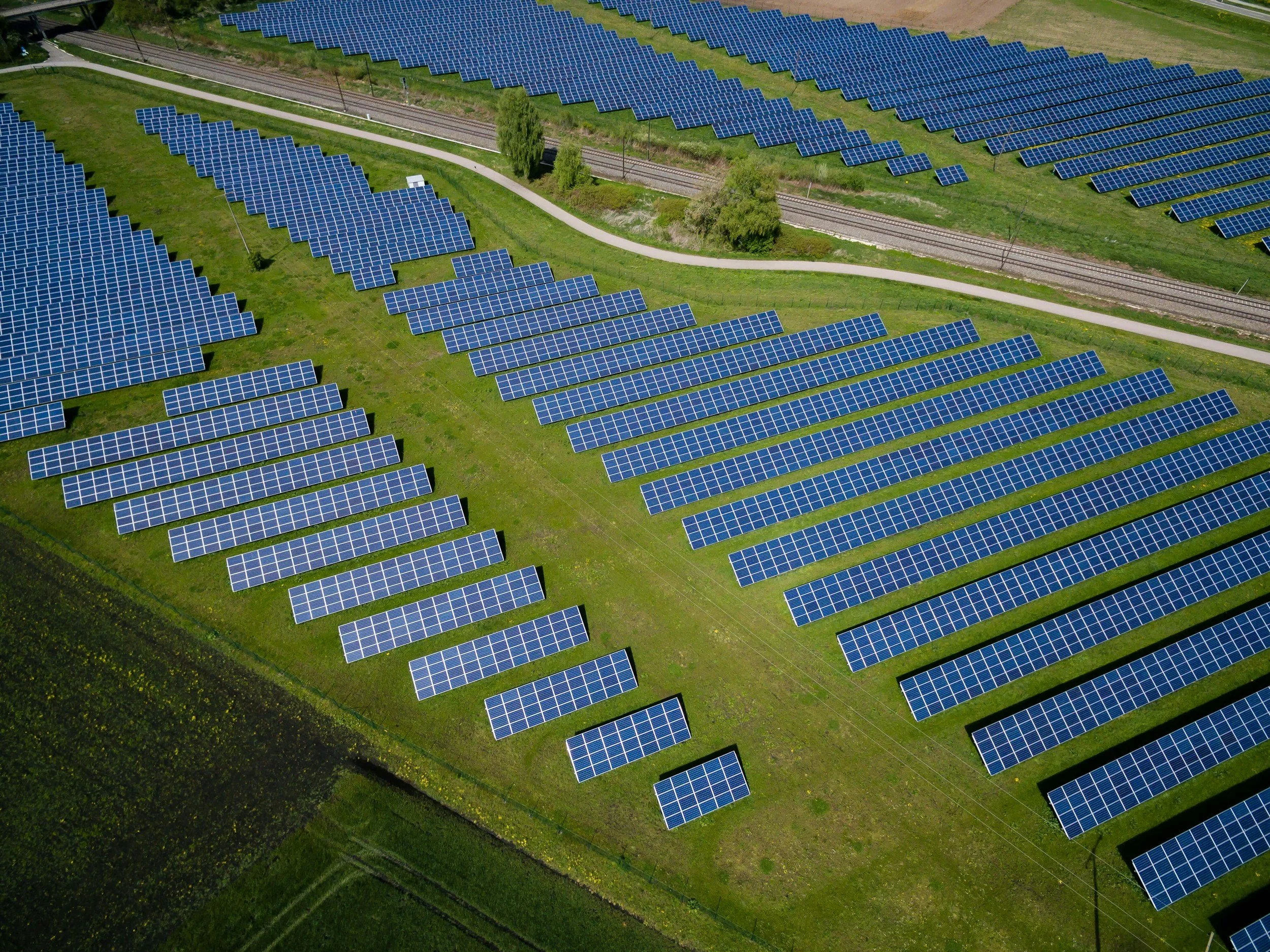
Clean Energy
A decade ago, renewable energy was certainly growing, but still a fringe element in most national energy mixes.
Today, it drives the global electricity transition.
In 2016, renewable capacity additions were gaining momentum.
Around 161 GW of new capacity was installed globally, led by solar PV and wind, yet fossil fuels still dominated expanding power systems.
At this time, the global capacity reached an all time high of 2’017 GW.
Today, the pace of change accelerated dramatically:
Global renewable energy capacity reached has more than doubled to 4,448 GW, with 585 GW added in 2024 alone.
Perhaps the most striking figure is that in 2024, renewables accounted for 92.5 % of all new power capacity added worldwide. This represents not only growth, but structural dominance. For the first time, nearly all expansion in electricity generation comes from clean energy, signalling that renewables are no longer a niche sector, but the backbone of global power production.
Solar and wind power accounted for most of that growth as they became the most cost-competitive sources of new electricity capacity across large parts of the world.
In the European Union, wind and solar electricity together surpassed fossil fuels in total power generation for the first time in 2025, signalling a structural shift within a major advanced economy.
Even where fossil fuels continue to play a role, their dominance is waning in electricity generation. These milestones aren’t isolated events, they reflect systemic transformation: markets, policy incentives, and technology costs are now aligned toward cleaner power.
Using the United Kingdom as a case study represents a clear example of this trajectory.
Renewables grew from providing around 15 % of the energy mix in 2016 to approximately 45 % in 2026.
This isn’t a marginal change; it’s a 200 % increase! More work can always be done, but it is good to see that the direction is positive.

Corporate Strategy
In 2016, corporate sustainability reporting was growing but inconsistent. Only early adopters, primarily larger multinational companies, voluntarily published environmental or social disclosures.
Fast forward to 2026, and sustainability is structural:
By 2024, ~91 % of listed companies globally disclosed sustainability-related information, reflecting near-universal adoption of Environmental, Social, and Governance (ESG) reporting.
Climate goals and ESG metrics now regularly inform executive compensation, capital planning, risk governance, and investment decisions.
Carbon reporting has surged: For instance, in the last decade, companies disclosing environmental data to CDP grew from 6,000 to over 22,000, reflecting that a much broader range of organisations now prioritise and act on sustainability data.
This shift reflects a deeper integration of sustainability into corporate decision-making, risk evaluation, and performance measurement. Companies today are far more likely to invest in resilience, clean technologies, and decarbonisation than they were a decade ago.
A key reason for this change isn’t trendiness; it is now becoming widely accepted that sustainability drives real strategic decisions, influencing investment, risk management, and organisational resilience.

The Job Market
One of the most visible indicators (and drivers!) of this upward momentum is the dramatic growth of sustainability-focused workforces.
Here, in the UK, green and sustainable jobs grew from 513,300 in 2015 to 690,900 in 2023, a 34.6 % increase over only eight years.
Globally, the renewable energy workforce reached about 16.2 million jobs by 2023, up sharply from 9.8 million a decade ago.
The Rise of Technology
In 2016, digital tools played a smaller role across most workforces, and sustainability was no exception, with limited adoption for monitoring or managing environmental performance.
Emissions reporting was largely manual, data was retrospective, and artificial intelligence had virtually no influence on how organisations measured, managed, or reduced environmental impact.
By 2026, technology (AI in particular) has, and is becoming, a core enabler of sustainability execution.
Around 30 % of companies now use AI specifically to improve sustainability outcomes, while 36% apply AI to optimise energy consumption across operations. Nearly 1/2 of sustainability professionals report actively using or piloting AI, most commonly for energy efficiency optimisation, carbon emissions modelling, and automated compliance.
This shift marks a structural change: Sustainability has moved from static reporting to real-time measurement, forecasting, and optimisation. It has also expanded the horizon of what’s possible, opening new ideas and reshaping our understanding of the potential for sustainability interventions.
At the same time, the growth of digital infrastructure and AI has increased electricity demand, created concentration of decision-making power, and introduced risks around bias and overreliance on algorithms, a paradox that did not exist a decade ago.
These developments reinforce that the next phase of sustainability is not just digital, but carbon-aware and carefully designed to balance innovation with unintended consequences.

Policy and Regulation
Back in 2016, Europe’s climate framework was far lighter than today, and sustainability reporting was mostly voluntary and loosely defined.
Climate planning often sat outside core economic strategy.
By 2026, sustainability reporting has moved from voluntary guidance to binding, systemic rules.
Introduced in 2016, Task Force on Climate-related Financial Disclosures (TCFD) created the first framework for reporting climate risks, now mandatory in the UK for large companies and financial institutions.
The International Sustainability Standards Board (ISSB), established in 2021–2022, builds on this with globally aligned standards covering broader ESG factors.
Together, they have dramatically expanded the number of companies producing structured, comparable, and audit-ready sustainability data.
A far cry from what existed a decade ago.
Across the EU, sustainability disclosure is legally enforced through the Corporate Sustainability Reporting Directive (CSRD), dramatically expanding the number of companies required to report detailed, audited sustainability data.
Yet friction remains. Recent EU ‘Omnibus’ packages have delayed and narrowed CSRD obligations, while complex rules like Sustainable Finance Disclosure Regulation (SFDR) have often created confusion, slowing practical progress.
Ambition exists on paper, but implementation is uneven. In the EU and globally, where many countries remain off‑track on the 2015 Paris Agreement , this means regulations multiply without delivering consistent impact, fuelling frustration over the pace of real change.
Governments still face political and geopolitical constraints, but the direction of travel is clear, climate policy is now a structural feature of the regulatory landscape, not a peripheral aspiration.

Looking Ahead: 2026 → 2036
Looking back since 2016, from voluntary, fragmented reporting to binding frameworks and wider disclosure, shows how much structural groundwork has been laid and where acceleration toward 2036 is possible.
As we peer toward 2036, (yes that is now just as close as 2016), several defining trends will shape progress:
🔆 Renewable Integration & Grid Evolution —> By 2036, global renewable capacity is expected to exceed 11,000 GW, up from roughly 3,400 GW in 2024. Storage, flexible demand, and digital grid optimisation will convert this vast capacity from variable generation into firm, reliable power.
🚗 The Transport & Industry —> Electrification will accelerate sharply. EVs may become more mainstream and industrial processes shift to clean power. This will drive electricity demand growth measured in the thousands of additional GW globally, supported by green hydrogen, high‑temperature electrification, and expanded charging infrastructure.
♻️ Circular Economy —> The world currently consumes over 100 billion tonnes of materials annually, and circularity is becoming a trillion‑dollar market. By 2036, circular manufacturing and material recovery will hopefully reduce the need for new extraction, lowering the GW-scale energy demand associated with mining, refining, and production.
🧭 Accountability, Transparency & Regulation —> Sustainability performance may become fully auditable and mandatory. AI‑enabled monitoring, from satellite methane detection to automated ESG analytics, will quantify environmental impact with precision, including the GW-scale energy footprints of corporate operations and FAR more accurately analysed Scope 3 supply chains.
🤖 AI, Technology & the Sustainability Paradox —> AI already consumes electricity on the scale of tens of GW globally, with emissions potentially reaching 24–44 million tonnes of CO₂ annually by 2030. Yet AI remains a powerful enabler of optimisation, forecasting, and resource efficiency across energy systems, reducing GW demand elsewhere. It’s evolution is unpredictable and simultaneously a fine balance between scary and exciting.
🌌 The Unpredictable Frontier —> Just as the 2010s delivered the solar cost collapse and the 2020s unleashed generative AI, the 2030s will almost certainly be reshaped by a breakthrough we can’t yet name, a technology capable of shifting global energy demand or supply by hundreds of GW in ways we can’t currently model.
Sustainability has shifted from aspiration to trajectory, and the momentum is unmistakable. The task for 2036 is simple: Turn that momentum into scaled, equitable action.