ITIL 5: The Sustainability Shift
Amid the pace of digital transformation, organisations are wrestling with rapid technological change, shifting stakeholder expectations, and escalating environmental and social pressures.
Against this backdrop, the arrival of ITIL 5, the next major evolution of the world’s most widely adopted service and product management framework, marks a significant structural shift for IT leaders and sustainability professionals alike.
For the first time, sustainability is elevated from a peripheral concern to a core dimension of service quality, reshaping how technology organisations define value, build services, and contribute to broader environmental and social goals.
As ITIL ambassador Vishal Vyas aptly noted this week:
“Not long ago, sustainability was something you handled in a separate report.
Today, it’s increasingly part of how technology decisions are judged.”
But what does this shift mean in practice?
This article explores what ITIL is, why sustainability is now central to its evolution, why it matters for IT and sustainability leaders, how organisations can act, and how this development supports wider environmental, social, and governance ambitions.

The What and Why?
The Information Technology Infrastructure Library, or ITIL, has long been the foundational framework for managing technology-based services.
Originally developed in the 1980s to standardise and elevate IT service practices, ITIL has evolved through successive versions to reflect changes in business and technology.
What once focused primarily on IT service management now embraces digital product and service management across the full lifecycle, from strategy and design through operation and continual improvement.
The new ITIL 5 responds to a digital environment dominated by cloud computing, AI, integrated product and service lifecycles, and evolving stakeholder priorities.
Rather than prescriptive processes, ITIL now provides comprehensive guidance that helps organisations navigate complexity, embed governance, and create measurable value.
This evolution reflects a broader shift in how technology organisations operate: Digital experiences are not peripheral, they are central to customer value, and service quality must be assessed across multiple dimensions, including sustainability.

Sustainability as a Core Pillar
The inclusion of ‘sustainability’ in ITIL 5 is a big step forward.
It is no longer pointed to as an optional lens or a bolt-on extension, but a structural pillar woven into the framework’s value definition.
This marks a stark departure from earlier versions, where sustainability might have been discussed in isolated modules or specialist extensions.
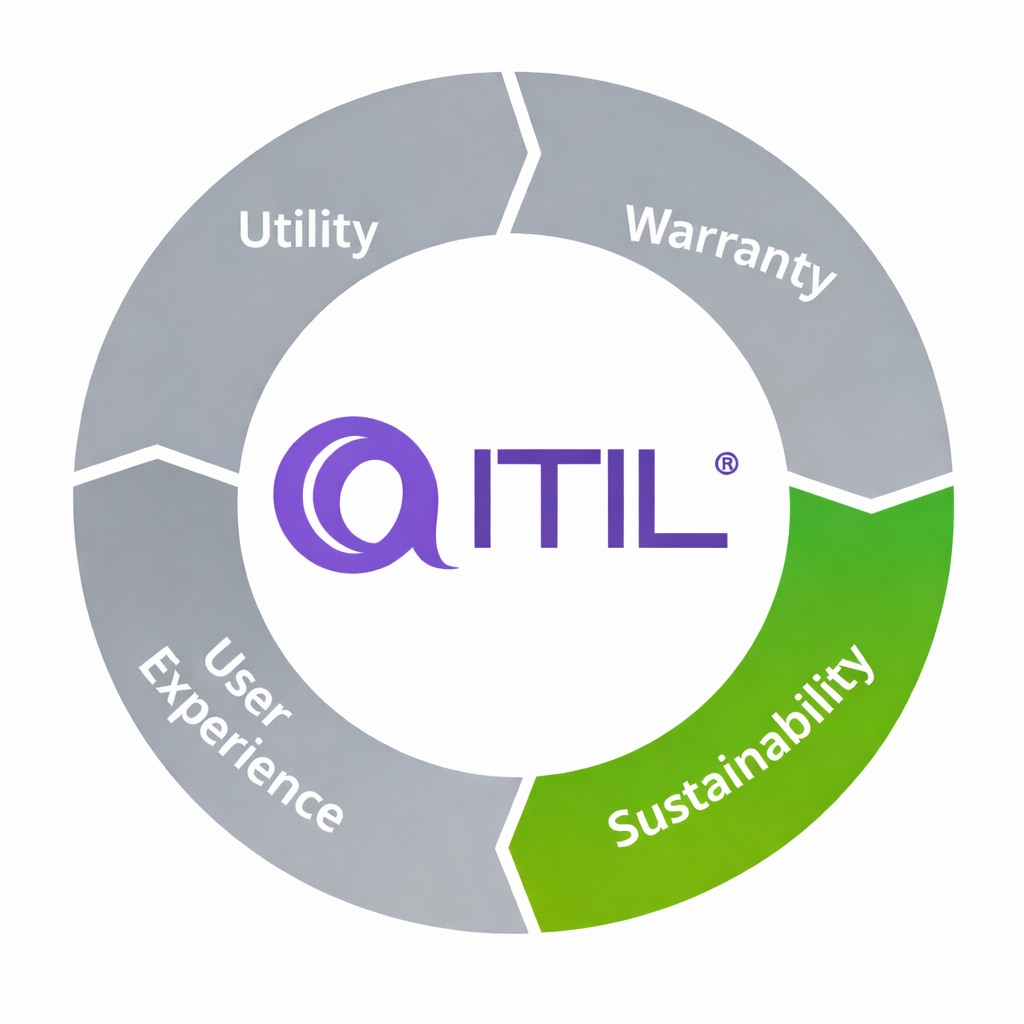
ITIL 5 elevates sustainability alongside traditional measures such as utility, reliability, and user experience.
There are several key drivers behind this shift:
1. Stakeholder Expectations and Market Pressure
Sustainability has moved from ethical aspiration to strategic imperative. Clients, investors, regulators and end customers increasingly evaluate organisations based on ESG performance (environmental, social, and governance metrics) when making sourcing and partnership decisions.
Research shows that IT services customers often rank sustainability as a critical criterion for selecting vendors, with more than half of buyers indicating ESG performance is now integral to procurement decisions.
2. Regulatory and Reporting Demands
Globally, reporting standards and regulatory regimes such as the EU Corporate Sustainability Reporting Directive and the UK’s forthcoming Sustainability Reporting Standards require transparent disclosure of environmental impacts. This includes emissions from digital operations and data infrastructure.
UK IT leaders are starting to recognise that sustainability must now be embedded at every level to meet these obligations, and future-proof their organisation against oncoming ones.
3. Strategic Value Creation
Organisations are recognising that sustainability is not a cost centre but a source of resilience and competitive advantage. Once again, that idea of ‘future- proofing’ comes into play.
Efficient cloud usage, energy-saving practices, and responsible supply chain decisions can reduce costs while reducing environmental harm.
‘Sustainability’ in ITIL Terms
Within ITIL 5, sustainability expands the definition of service quality. Traditional ITIL emphasised:
➜ Utility: Does the service fulfil its intended function?
➜ Warranty: Is the service reliable, secure, and available?
➜ Experience: How do users perceive the service?
Now, a fourth dimension:
➜ Sustainability: Does the service support environmental stewardship, social responsibility, and long-term economic viability.
This integrated view means sustainability must be considered across the service lifecycle.
This includes: Procurement, design, delivery, operations, and end-of-life management. Practical examples include:
➜ Green procurement that prioritises energy-efficient hardware and sustainable suppliers
➜ Sustainable development practices such as efficient code, ethical data handling, and reduced technical waste
➜ Operations that minimise energy usage through cloud optimisation and data centre efficiency
➜ Responsible disposal or reuse of hardware to minimise e-waste
By codifying these expectations, ITIL 5 aligns technical decision making with organisational sustainability goals and global climate imperatives.

Why this Matters for IT Leaders
For modern technology leaders, ITIL 5’s sustainability focus matters because it transforms how success is defined and measured. Key implications include:
1. Aligning IT Strategy With Corporate ESG Goals:
Technology organisations often operate in silos, leading to sustainability efforts that are disconnected from broader corporate strategy. ITIL 5’s integrated model ensures technology initiatives are aligned with enterprise-wide sustainability targets, increasing coherence and accountability.
2. Future-Proofing Against Risks:
Sustainable IT practices build resilience against supply chain disruptions, energy volatility, and tightening regulation. By embedding sustainability into service value definitions, organisations anticipate risk rather than react to it.
3. Driving Innovation:
Sustainability measures, such as energy awareness and resource efficiency, often stimulate innovation, prompting teams to rethink architectures, optimise processes, and explore new delivery models.
What Can IT Leaders Do Now
A November 2025 study by IT service management firm Flexera found that UK IT leaders believe their organisations are falling short of their own sustainability targets.
Out of these leaders questioned, 93% said sustainability is increasing in priority, yet 83% admitted their organisation needs to step up.
With this in mind, what can be done to ‘step up’
Adopting ITIL 5’s sustainability perspective is not about waiting for formal certification; it’s about action today. Leaders can begin by:
➜ Embedding Sustainability Metrics: Driving Innovation
Define and track sustainability KPIs alongside performance and cost metrics. This could include energy consumption, carbon emissions per service, or hardware lifecycle impacts.
➜ Incorporating ESG Into Procurement:
Require sustainability data and commitments from technology suppliers. This aligns with increasingly strict stakeholder expectations and regulatory benchmarks.
➜ Educating and Empowering Teams
Upskill IT professionals on sustainable practices and encourage accountability. Framework guidance and education — including sustainability-focused training — help teams embed good practice in their daily work.
➜ Linking With Wider Corporate Sustainability
Ensure IT measurement is part of broader corporate ESG reporting. By connecting digital operations data with enterprise sustainability dashboards, organisations close the gap between operational activity and strategic commitments.

The Wider Impact:
ITIL 5’s sustainability pillar is about more than IT optimisation; it represents a cultural shift in how digital organisations contribute to environmental and social progress.
➜ Environmental Impact: Digital services and cloud infrastructure account for growing energy use and emissions. Sustainable practices can mitigate these impacts while improving efficiency.
➜ Social Responsibility: Ethical governance and inclusive design practices support social objectives from data privacy to accessibility.
➜ Economic Resilience: Sustainable digital strategies reduce waste, improve cost predictability, and strengthen long-term viability.
The arrival of ITIL 5 marks a foundational shift in digital service management, one that explicitly recognises sustainability as a core indicator of value.
This evolution reflects real-world imperatives: Stakeholder expectations, regulatory shifts, operational resilience, and the strategic importance of sustainable practices.
For IT leaders and sustainability champions, ITIL 5 provides a shared language and structured framework to elevate sustainability from separate reporting obligations to a central pillar of how technology organisations define, deliver, and continually improve value.
Crucially, this shift also signals to other departments, from procurement and finance to operations and governance, that sustainability must be embedded into decision making across the enterprise, not confined to ESG teams or annual reports.
In doing so, ITIL 5 not only equips organisations for the challenges of 2026 and beyond but invites them to play a proactive role in shaping a more responsible, resilient digital economy.