Beyond Regulation: The Real Drivers of Scope 3 Sustainability
For years, sustainability has been framed through two dominant lenses: regulation and responsibility.
Companies act either because they have to, or because they feel they should.
But this framing misses a more important shift: Scope 3 is becoming critical not because of external pressure, but because it reveals how organisations actually function.
But when it comes to Scope 3 emissions, particularly in our focus categories, like employee commuting and business travel, this framing is no longer sufficient.
Scope 3 sits in a complex and evolving space. It is often the largest share of a company’s carbon footprint, frequently over 70%, according to research from the Carbon Disclosure Project (CDP) and the Science Based Targets initiative (SBTi). In some cases, supply chain emissions can be up to 26 times higher than operational emissions, highlighting just how material, and underexamined, this category is.
Yet despite this scale, Scope 3 remains the least directly controlled and historically the hardest to measure.
At its core, Scope 3 is not just a reporting category, it is a proxy for how value flows through a business, from supply chains to workforce movement. That is why leading organisations are paying attention, regardless of regulatory timelines.
This is where the real story begins.

The Shift
From obligation to advantage.
If regulation isn’t the sole driver, what is?
The answer lies in convergence. Sustainability, particularly Scope 3, is increasingly being shaped by its intersection with core business priorities:
➲ Financial performance
➲ Workforce dynamics
➲ Operational resilience
➲ Risk management
➲ Supply chain optimisation
This convergence is changing the fundamental question. Rather than asking “How do we report this?”, leading organisations are asking:
“What is this telling us about how our business actually works?” Or, to use the buzz word of 2026: Resilience.
Scope 3, as we often with employee commuting, is no longer just a carbon issue. It is a data problem, a workforce problem, a strategic planning problem. Or, to use the buzz word of 2026: A ‘resilience’ problem.
The Hidden Cost of Movement
At Incite Environmental, this is most tangible in the Scope 3 categories we actively help companies manage; employee commuting and business travel.
These are often treated as externalities, costs absorbed by employees or buried in expense lines. But this overlooks their real financial impact.
Inefficient travel patterns drive:
➲ Higher reimbursement and travel costs
➲ Increased demand for expensive parking infrastructure
➲ Lost productivity from long or unreliable commutes
At a macro level, congestion alone is estimated to cost the UK economy billions annually, according to transport studies and government analysis. At an organisational level, even marginal inefficiencies, such as high levels of single-occupancy car use or poorly aligned shift travel, compound into meaningful cost leakage.
More broadly, tackling Scope 3 emissions is increasingly linked to financial opportunity. CDP reports that companies have already identified $165 billion in potential financial benefits from supply chain emissions reduction, with $13.6 billion in realised savings.
What starts as a sustainability exercise often becomes a cost and efficiency programme.

Workforce and Wellbeing
One of the most underappreciated drivers of Scope 3 action is talent.
In competitive labour markets, particularly in engineering, manufacturing, and technical sectors, accessibility is increasingly a deciding factor in recruitment and retention.
If a site is difficult, expensive, or stressful to reach, it directly limits the available talent pool.
Research from organisations such as the Chartered Institute of Personnel and Development consistently links longer or more difficult commutes with:
➲ Lower job satisfaction
➲ Higher employee turnover
➲ Increased stress and reduced wellbeing
For shift-based or site-dependent operations, these effects are amplified.
What appears to be a “carbon issue” is often, in reality, a workforce accessibility and experience issue—one with direct implications for productivity and retention.
Operational Resilience?
For many organisations, employee mobility is not optional, it is foundational.
Factories, engineering hubs, logistics centres, and project sites depend on people being in the right place at the right time. When commuting breaks down, operations follow.
Disruption, whether from transport strikes, fuel price volatility, or infrastructure constraints, can lead to:
➲ Delayed production
➲ Missed service commitments
➲ Increased operational risk
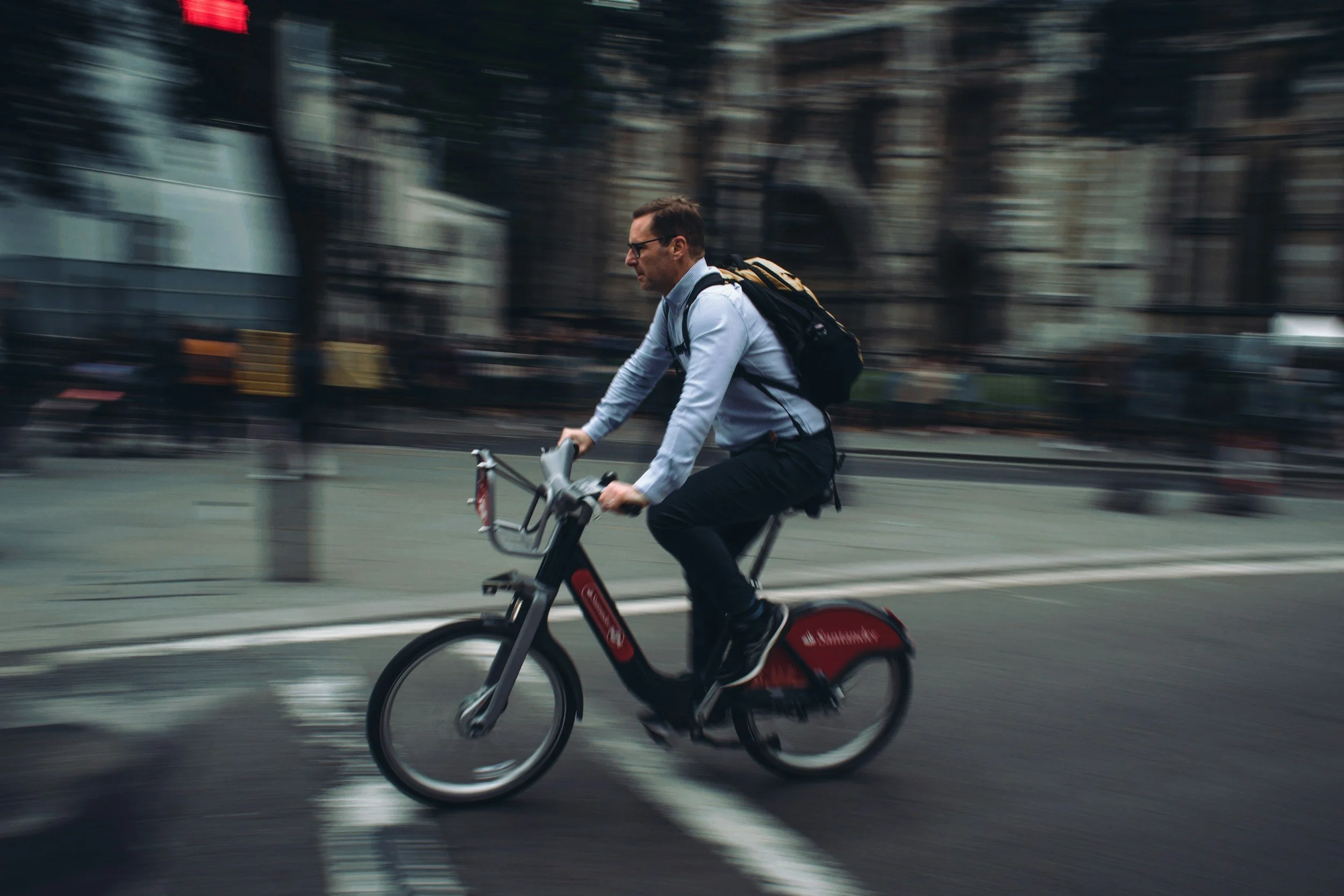
In this context, commuting becomes (once again) a resilience issue. Understanding how employees travel is essential to understanding how robust operations really are.
Yet in practice, most organisations still lack continuous, detailed visibility into this dependency.
Scope 3 Immaturity
Despite its importance, Scope 3 remains the least mature area of corporate sustainability.
Part of the challenge is that Scope 3 is often overcomplicated.
In reality, many Scope 3 emissions are simply someone else’s Scope 1 and 2.
What appears as an external, hard-to-control category is, in many cases, a reflection of emissions that sit elsewhere in the value chain, but are still directly influenced by organisational decisions.
Data from CDP shows:
➲ Companies are significantly more likely to measure Scope 1 and 2 emissions than Scope 3
➲ Only around 15% of companies have set Scope 3 targets
➲ Supply chain emissions can be many multiples higher than operational emissions
Meanwhile, research from Capgemini suggests that only 37% of Scope 3 emissions are currently covered by active decarbonisation initiatives in Europe.
The implication is clear: Scope 3 is no longer optional, but most organisations are still underprepared.
Supply Chain Thinking
Many organisations have become highly sophisticated in managing their external supply chains, tracking goods, optimising logistics, modelling disruption scenarios.
But far fewer apply the same rigour to their internal “people supply chain.”
Employees represent a daily inbound flow to operational sites. Their movement patterns influence capacity, efficiency, and risk in much the same way as materials or components.
Scope 3 mobility sits at the intersection of these ideas:
➲ It is a flow problem
➲ It is a planning problem
➲ It is a system optimisation problem
The organisations that recognise this are beginning to treat mobility not as a one-off survey exercise, but as a continuous intelligence capability.
Closing the Data Gap
Historically, most Scope 3 mobility data has been:
➲ Fragmented
➲ Static
➲ High-level
This leads to reporting that is difficult to defend and even harder to act upon.
As disclosure expectations rise, particularly under frameworks influenced by the International Sustainability Standards Board (ISSB) and SBTi, this approach is no longer sufficient.
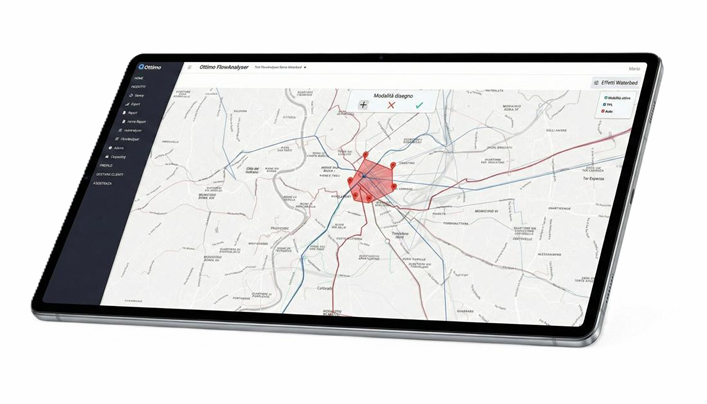
What’s emerging instead is a shift toward bottom-up, data-driven mobility intelligence, including:
➲ Employee-level travel data
➲ Postcode-level mapping
➲ Continuous data collection rather than one-off surveys
➲ Scenario modelling to test interventions before investment
This transforms Scope 3 from a reporting burden into a decision-making tool.
In Practice
At Incite Environmental, this shift is already playing out in the work we see on Scope 3 commuting and business travel.
One consistent finding stands out: there is no single driver.
Each organisation approaches Scope 3 from a different starting point:
Improving reporting credibility
➲ Addressing recruitment and retention challenges
➲ Reducing operational risk
➲ Optimising estate and infrastructure
The common thread is that the earlier these drivers are identified, the more effective the response becomes.
When sustainability is treated as a standalone objective, progress is often slow.
When it is connected to core business priorities, it becomes a catalyst for change.

From Insight to Action
This is where solutions like ours come in.
Our platform provides a continuous, data-driven understanding of employee mobility, turning commuting from an assumption into a measurable, manageable system.
For complex organisations with distributed workforces, this enables:
➲ A quantified baseline of commuting emissions
➲ Real insight into how employees actually travel
➲ Identification of inefficiencies such as avoidable single-occupancy car use
➲ Scenario modelling to test interventions across cost, carbon, and wellbeing
Crucially, it also supports broader business priorities:
➲ Workforce accessibility and recruitment
➲ Parking and estate optimisation
➲ Operational resilience and planning
➲ Credible Scope 3 reporting aligned to future-proof against emerging standards
Rather than treating commuting as a peripheral issue, it becomes a strategic lever for performance.
The Message for Leaders
The key takeaway is clear:
Sustainability should not be pursued in isolation.
The most effective strategies are those that:
➲ Align with financial and operational priorities
➲ Improve employee experience
➲ Strengthen resilience
➲ Deliver measurable business value
Regulation will continue to evolve, and expectations will rise.
But the organisations that lead will not be those that wait for compliance.
They will be the ones that recognise sustainability as a lens through which to better understand (and optimise) their entire business.
Scope 3 is not just a reporting challenge.It is an opportunity to rethink how organisations operate at a fundamental level.
And increasingly, the real driver is not regulation or even responsibility. It is performance.