Sustainability: From Alienation to Accessibility
A joint perspective by Ethan Howick and Gabriel Baraldi
Sustainability cannot remain a siloed function within organisations. Too often, it is confined to a single team, operating separately from the rest of the business. But real progress depends on organisation-wide buy-in.
From finance and operations to marketing and HR. When sustainability sits in isolation, it limits ownership and fosters a “not my responsibility” mindset.
This is a corporate example, but relevant outside of the work environment, on a wider, societal level.
To create meaningful change, sustainability must be embedded into everyday decision-making. It cannot be treated as a parallel agenda or an optional add-on. Instead, it should shape how businesses operate at every level, influencing both strategy and day-to-day choices.
It should relate and in-turn resonate to every day people, making everyday decision.
Sustainability creates lasting impact only when it becomes part of the culture, not the responsibility of a few. And only when it stays on the minds of many does it truly drive change.

The Gap
There is a persistent misconception that people don’t care enough about sustainability. In fact we thought very much the same way when researching this article.
In reality, the opposite is true. Research from organisations like the United Nations Development Programme and Nielsen shows that a large majority of people are concerned about climate change and willing to adjust their behaviour.
Yet there is a clear disconnect between intention and action, often referred to as the value-action gap.
This gap does not stem from apathy, but from accessibility. Sustainability can feel complex, overwhelming, and difficult to navigate. People may want to act but simply don’t know where to start.
The challenge, therefore, is not to convince people to care more, it is to make sustainability easier to understand and engage with.

Why the Alienation
Over time, sustainability has developed a reputation that can unintentionally exclude people. Messaging often promotes perfection, net-zero lifestyles, ideal consumption patterns, and strict behavioural standards.
When these standards aren’t met, behaviour can be met with shame or judgement. While well-intentioned, this can create an all-or-nothing mindset where anything less than perfect feels like failure.
At the same time, narratives can lean toward criticism, calling out hypocrisy or highlighting what individuals and organisations are doing wrong. This approach risks creating defensiveness rather than engagement.
Sustainability is also frequently associated with activism or extreme lifestyle changes. While these play an important role, they do not represent the only way to participate.
The result is that many people, despite caring deep down, do not see themselves reflected in the sustainability space. Instead of feeling invited in, they feel judged or excluded.
Sustainability, in this sense, becomes alienating rather than empowering.
From Perfection to Participation
To unlock broader engagement, the narrative around sustainability must shift.
Progress should be prioritised over perfection. Small steps, taken consistently, are far more impactful than unattainable ideals. Recognising incremental change builds momentum and encourages continued action.
Encouragement should replace criticism. People are more likely to engage when they feel supported for minor actions, rather than judged for not taking further ones. Positive reinforcement fosters long-term behaviour change and creates a sense of shared purpose.
Finally, sustainability must be normalised. It should not be seen as a specialist pursuit or an extreme choice, but as a standard part of everyday work and life. When sustainable thinking becomes routine, it removes the barrier of feeling “different” or “exceptional.”

Why this Matters for Businesses
For organisations, the implications are significant. When sustainability is treated as a side function, engagement remains low and opportunities are missed. It becomes a reporting exercise rather than a driver of innovation and value creation.
Research from McKinsey & Company highlights that companies embedding sustainability into their core strategy are more likely to outperform financially.
This reflects a broader shift—from viewing sustainability as a compliance requirement to recognising it as a strategic advantage.
The transition is clear: sustainability must evolve from being the responsibility of a single team to becoming an organisational culture.
Making it Visible
A key barrier to engagement lies in communication. Sustainability is often hidden within lengthy reports, technical frameworks, and complex terminology. While these are essential for transparency and accountability, they are not designed for broad accessibility.
This is where contributors like Gabriel Baraldi bring an important perspective. A young sustainability professional in his 20s, Gabriel works as an ESG Analyst at Inspired PLC.
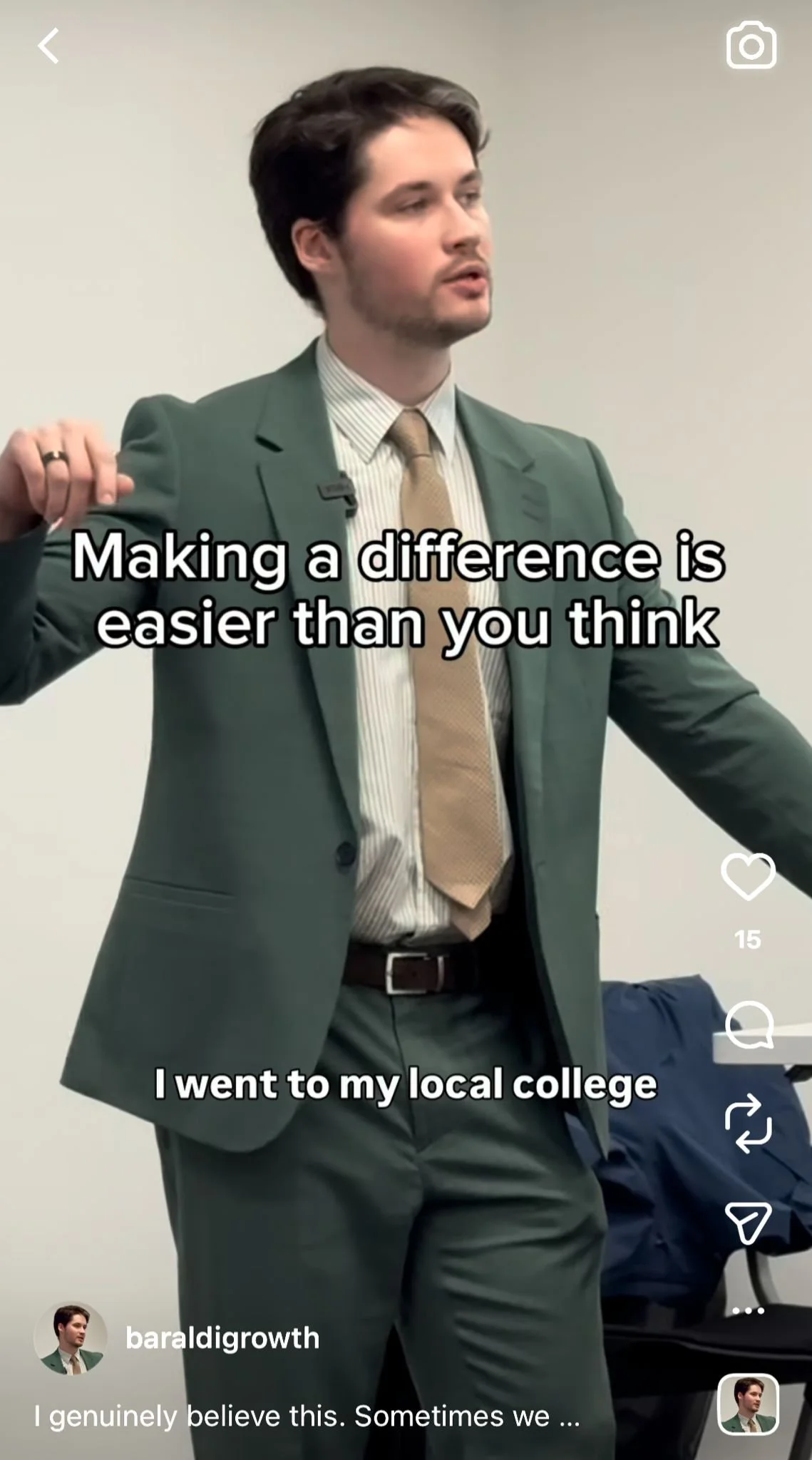
Alongside his role, he runs an Instagram page focused on highlighting the reality of working as a sustainability professional in a corporate setting, one of the few platforms actively normalising what it means to work in ESG and making its importance more accessible to a wider audience.
Other pages normalise a wide range of careers, from nursing and gardening to physiotherapy and finance. His role is to do the same for sustainability: to normalise what it means to work in the field. As Gabriel puts it:
“Fully audited and pristine ESG reports with great narratives and heaps of data are all too common. And make no mistake, they’re great. Decision-useful data goes a long way, particularly for investors and for accountability.”
However, he highlights a critical limitation:
“Apart from 21-year-old me doing a dissertation on ESG reporting, what other young person… will be flicking through a hundred-page-long document in their spare time?”
This underscores the need for multiple communication channels. Different stakeholders engage with information in different ways, and sustainability must meet people where they are. When communication is simple, relatable, and engaging, it becomes far more likely to inspire action.
Normalising through Social Media
This is where platforms like Instagram play a powerful role. They offer an opportunity to reach wider audiences and communicate in a more human, accessible way. Yet corporate sustainability remains largely absent from these spaces.
Gabriel experienced this gap firsthand:
“I struggled to find a page that spoke about corporate sustainability. When I started my own, it was partly to test whether this type of content would resonate.”
The response was immediate and compelling:
“By my first 11 videos, the page had already reached over 60,000 views, which reinforced that there is an appetite for more accessible ESG conversations.”
Through his platform, he breaks down what sustainability roles actually involve, using short, digestible content to demystify the field.
By translating complex concepts into everyday language, he makes corporate sustainability more understandable and less intimidating.
His page (@baraldigrowth) plays a key role in normalising both the day-to-day reality and the broader importance of ESG within a corporate context.
He also addresses an important misconception:
“Nobody is perfect, and pretending that we are just creates a wall around us.”
This honesty is key.
By showing the realities of sustainability work, including its imperfections, it becomes more relatable. It shifts the focus from idealised behaviour to practical, achievable action.

Why this Matters
Making sustainability visible and accessible has far-reaching implications. It allows people to see themselves within the conversation and understand how they can contribute.
It also reaches audiences who may never engage with formal reports or traditional corporate messaging.
As Gabriel notes, there is also a risk in staying silent:
“Organisations are scared of greenwashing. So what do they do? Greenhushing.”
‘Greenhushing.’ The opposite reaction to its counterpart, is the practice of underreporting or staying silent about sustainability efforts to avoid accusations of greenwashing.
This hesitation can prevent genuinely sustainable organisations from sharing their progress, missing opportunities to connect with values-driven employees, customers, and partners.
By contrast, open and accessible communication helps bridge the gap between corporate sustainability and everyday understanding. It transforms sustainability from something abstract into something tangible and actionable.
The Way Forward
To drive meaningful change, sustainability must invite participation. It needs to remove friction and create pathways for action at every level, within organisations and beyond.
The goal is not perfection or expertise. It is widespread, collective progress. This means creating environments where people feel empowered to take part, regardless of their starting point.
Most people already care. What they need is a way in, a place to start.
Sustainability becomes truly powerful when it feels accessible enough for everyone to take part.