Behind Every Prompt: How AI is Quietly Reshaping the Planet
Did you know that Google just revealed that a basic text-based AI query on average consumes 0.24 Watt hour of electricity which is equivalent to lighting an LED bulb for 1-2 minutes. That does not seem like a lot of energy, but if you consider that at average a single AI tool like ChatGPT handles 2.5 billion queries a day it means that it consumes the energy equivalent to lighting a light bulb continuously for over 6 years.
It is no secret that the use of AI is rapidly increasing. Therefore, it is extremely important to reflect and understand not only the amount of energy used every time we ask AI a simple question but also its carbon footprint along with the social and environmental impact it has.

From Keystroke to Server Farm
Do you ever wonder what happens after you ask AI to help plan your next trip or suggest activities to do over the weekend or even help you with some research?
Well, the journey of our question is quite physical, contrary to what a lot of us believe as soon as we press enter, our question doesn't vanish into thin air.
It's turned into a language computers understand, binary, or zeros and ones, and transported from the internet router through fibre optic cables to our internet service provider and on to big data centres.
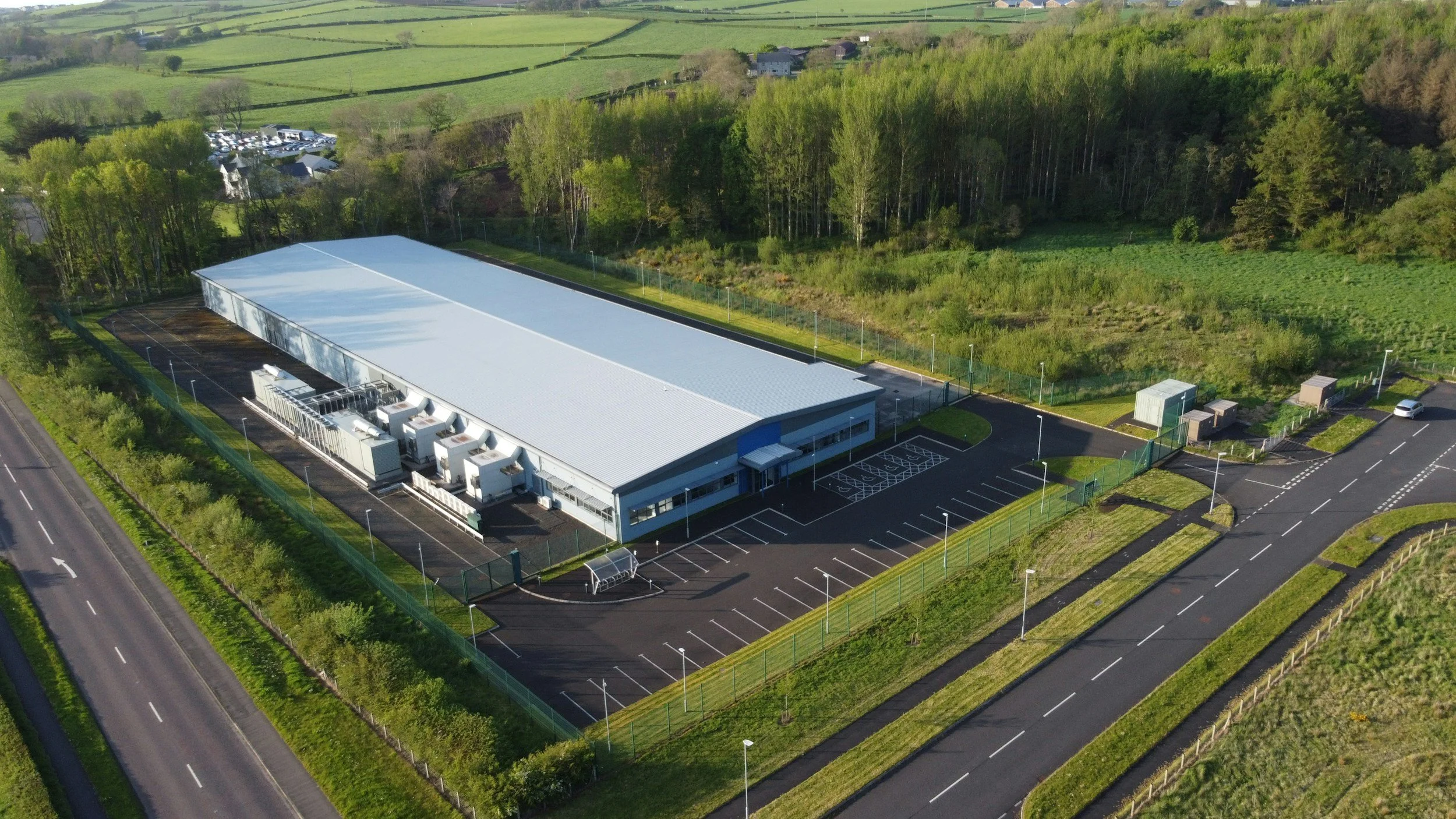
These data centres cover a space equal to anywhere between 1.2 and 140 Premier League pitches and could be located on the other side of the globe.
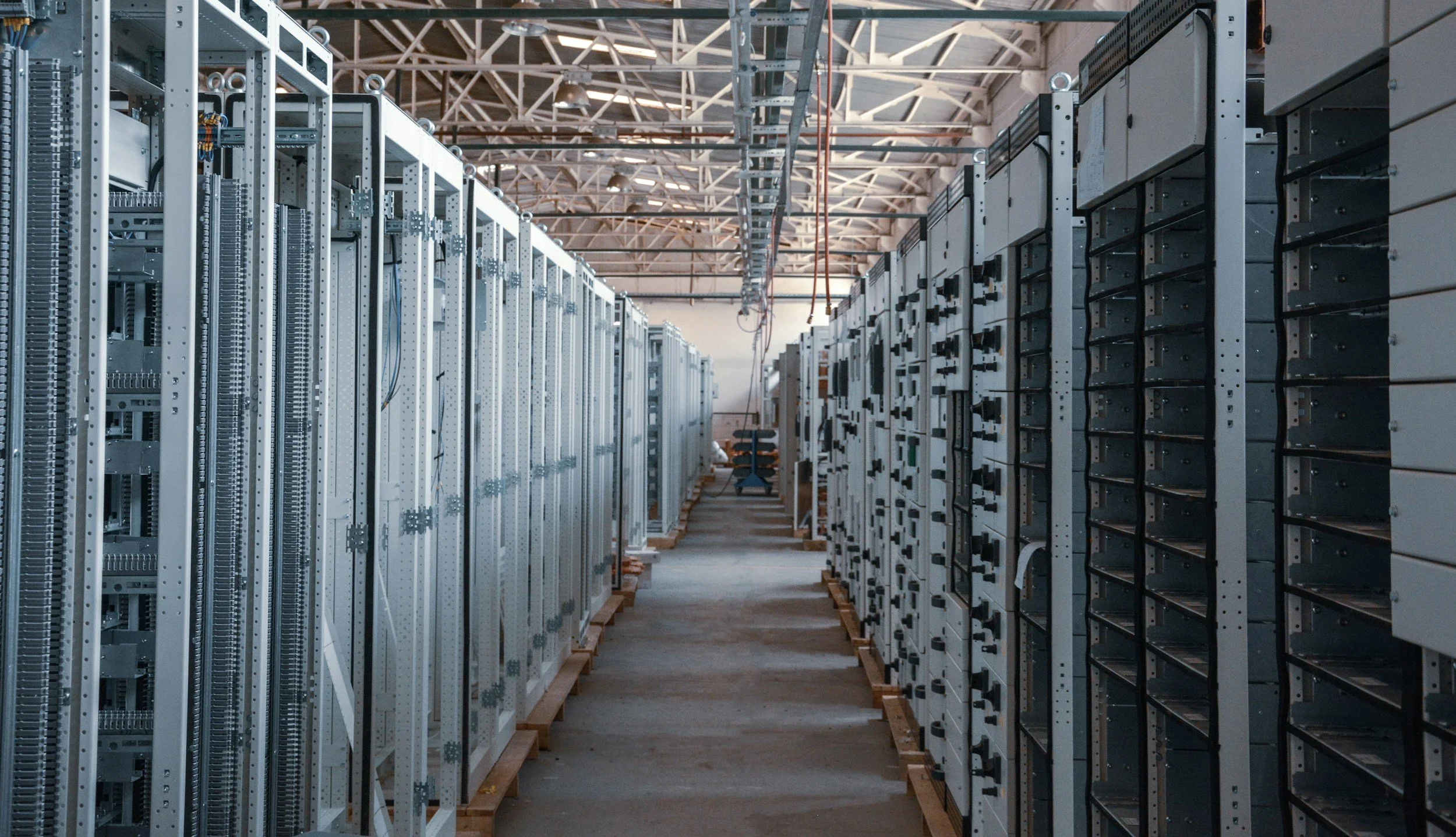
It's easy to picture 'the cloud' as something weightless, but data centres, a major part of that cloud, are huge tangible infrastructures with the actual metal servers, hard drives, routers, cooling units, and backup generators. With 11,959 data centres located across 179 countries as of July of 2026 and the demand for data centres to triple by 2030 due to the boom of AI it is expected that the energy demand for a global data centre will grow by 219 GW over the next five years, enough to power roughly 180 million US homes.
Inside the Machine
But size alone doesn't tell the full story of what a data centre is. Today, a data centre that is at least the size of a football pitch includes a large building housing IT infrastructure along with storage systems used for storing mass data sets.
Just like a hair dryer that’s left running for too long it heats up and needs to cool down. The machines in a data centre also heat up and have an optimum temperature for performance, one that needs to be maintained all day and night as data centres operate 24/7.
To maintain this optimum temperature, both air cooling and water-cooling systems are used. Recently, water cooling technology has gained popularity, as it's seen as a cheaper and greener option. However, with the world increasingly worried about water shortages and a quarter of humanity already deprived of clean water resources the growing demand for data centres highlights the need for alternative cooling methods.
The Next Climate Emergency
Beyond the energy used to construct these massive data centres and the large computers they house, they carry many lasting impacts which is why their growing numbers need to be considered an important environmental emergency.
Data centres use huge amounts of water and electricity every day to keep their facilities cool. It is estimated that mid-sized facilities can use up to 300,000 gallons of water a day, while large facilities can consume as much as 5 million gallons daily, comparable to what a small town uses.
Considering the energy used by data centres if, renewable energy is not prioritised the chances are air pollution will increase in surrounding areas.
While America has the highest no. of data centres there is growing concern amongst residents as two thirds of all data centres in America are in already water stressed areas like southern Arizona, the Colorado River Basin and Texas and complaints of, noise pollution grow in Virginia. Noise pollution from onsite generators and cooling systems is a quieter concern, but it should be no less pressing — it has caused sleep disruptions, headaches, and a lower quality of life in some areas. Competition for land is also growing, and is expected to keep growing, as data centres increase in number globally, endangering land needed for agricultural and rural use.
While data centres bring the promise of economic growth, the reality often looks different. Locals typically see temporary jobs surge during construction, only to be left dealing with water shortages, the constant background hum, and the loss of land. In the end, while corporations’ profit, communities pay the price.
A Reimagined Future
None of this means data centres must look the way they do today.
AI data centres are here to stay, however if we don't manage and regularise the growth of these data centres, we are looking at growing environmental concerns with catastrophic side effects.
A sustainable data centre should include:
➀ Renewed Power Facilities
This is already being seen in some areas around the world as many countries chase their ne-zero targets, a data centre in the UAE is 100% solar-powered and many other data centres look to invest in nuclear power plants instead of fossil fuels backed power generation.
➁ Energy Efficent Cooling Systems
Precision cooling and development of innovative liquid cooling techniques such as closed loop prevent gallons of water from evaporating into the atmosphere. Many sustainable data centres built near coastal regions use sea water for cooling.
➂ Recycling Heat Waste
Instead of considering heat as a drawback, capturing it and using it for either additional electricity production or to warm nearby homes can help reduce the need for cooling systems while helping local communities.
➃ Reduced Land Use
Green data centres should prioratise compact designs to reduce the need of converting rural land into construction sites and allowing the same land to be used for other spaces.
➄ Creating Long Term Jobs
As big as they are, data centres do not require a lot of people to run them and usually after the construction phase even the biggest ones employ around a 100 permanent staff whereas other facilities of that scale can employ up to 500-1000 people.
For sustainable data centres measures should be in place for companies to state upfront the jobs that will be available at completion and to require a minimum number of staff based on the size of the data centres along with training local communities for operation work rather than hiring external talent to help support local communities and truly delivering on the promise of economic growth from the locals perspective.
Why Cant We Wait
The blueprint for doing this responsibly is already out there. The problem is nothing requires companies to follow it.
At a time when we should be doing everything possible to fight climate change, data centres are quietly working against us on nearly every front.
They devour green spaces and farmland for construction land that could have gone toward housing, a crisis of its own that only keeps growing.
They run on staggering amounts of energy, much of it still pulled from fossil fuels. They drain local water supplies at a scale few residents ever anticipate. And for the people living nearby, the costs are personal: the constant hum of generators and cooling systems, the disappearance of land they once relied on, and jobs that vanish as quickly as the construction crews do.
AI is not going away —that ship has sailed.
The more useful conversation now isn't whether we should use AI, but how we hold the infrastructure making it possible accountable. Data centres are the physical, unavoidable cost of every query, every image generated, every model trained and, they're the piece of this puzzle that most urgently needs regulation, because they're where environmental damage is happening. Every calculation, every response, every "thinking" moment isn't happening in some abstract cloud it's happening in a warehouse full of servers, pulling electricity off a grid, pulling water from a reservoir.
The convenience of AI hides its physical weight from the people using it.
That's why responsible use matters just as much as responsible regulation. It's easy to treat AI like its free type a question, get an answer, move on without a second thought. But every request draws real energy from a real source, often one still tied to fossil fuels. Using AI only when it's genuinely needed, rather than reflexively, isn't about limiting innovation it's about recognising that convenience has a cost, and that cost is currently being paid by the environment and the communities living beside the data centres making it possible.