Smart Meters, the Data Gap, and Why Some Households Are Quietly Overpaying.
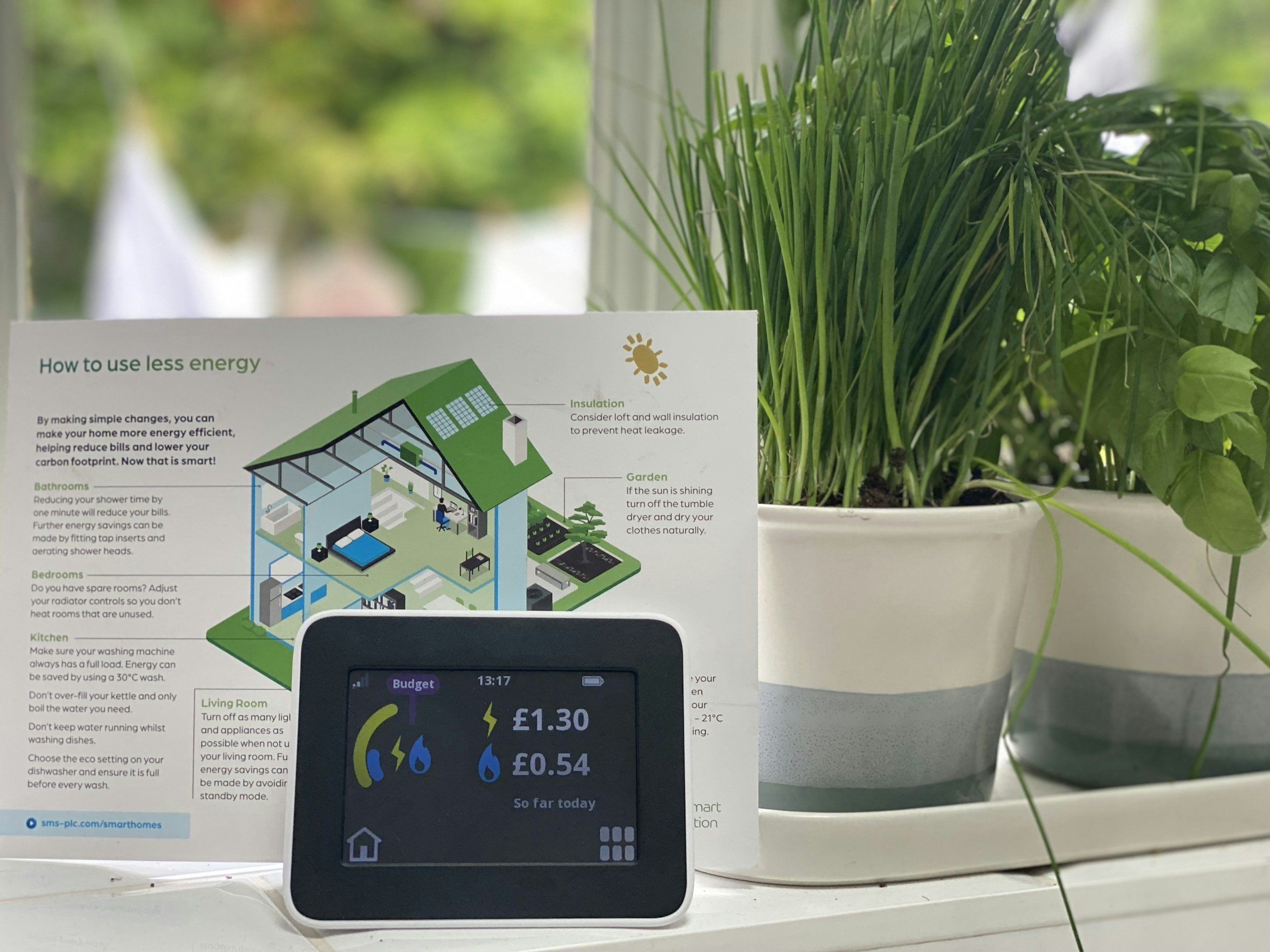
Smart meters are often discussed as though the problem has already been solved. Once installed, the assumption is that the grid now has a complete picture of how Britain consumes energy. In reality, the rollout has progressed slowly over more than a decade, and the data produced by the meters currently in place is far less useful than most people assume.
The Reality
Here is where things actually stand. Smart meter coverage across Great Britain has passed the majority of households, but "installed" and "functioning correctly" are two very different things.
A significant proportion of first-generation (SMETS1) meters lost their smart functionality when customers switched supplier, reverting to manually estimated readings.
Even among second-generation meters, connectivity issues, signal dead zones, and communication faults mean that a considerable number of households are relying on hardware that should be transmitting half-hourly consumption data but is not doing so reliably.
This matters more than is commonly acknowledged, because the entire shift toward smarter, fairer energy pricing depends on that data flowing consistently.
Time-of-use tariffs, demand-side response, and accurate half-hourly settlement all rely on the assumption that granular consumption data exists and is usable.
When that data is missing or incomplete, the system defaults back to estimates, and it is at this point that problems begin to arise for consumers.
The Hidden Cost
This is the aspect that receives far too little attention: a considerable number of households in the UK are currently not on any contract at all.
They may have fallen off a fixed tariff, moved into a property without arranging one, or had their supplier collapse during the 2021–22 market crisis without ever being properly re-contracted onto a reasonable deal.
In these circumstances, customers are not placed on some protected default; they are moved onto deemed, or "out of contract," rates.
These rates are consistently among the most expensive a supplier offers. This is rarely a brief inconvenience either, many households remain on these rates for months without realising it, since nothing distinguishes the bill as unusual at first glance.
The frustrating part, from a professional standpoint, is that this is precisely the kind of issue that accurate consumption data ought to resolve. Where a property's usage is being captured properly and an account is being actively monitored, an out-of-contract situation should be identifiable within a single billing cycle.
But when meter data is missing, estimated, or delayed, the issue typically goes unnoticed until the customer receives a bill and questions why they are paying substantially more than a fixed tariff would cost.
The smart meter rollout, then, is no longer simply a question of installation coverage. It has become a data quality and account monitoring issue. Coverage figures look reassuring on paper, but beneath that headline number lies a substantial number of dead connections, estimated reads, and households steadily overpaying on deemed rates because no one is monitoring the situation closely enough to intervene.
Why is this a Sustainability Issue?
This is where the conversation tends to be framed too narrowly.
Smart meters are usually discussed purely in terms of cost and billing, yet the underlying data gap is in fact one of the more significant obstacles to decarbonising household energy use in the UK.
Every credible net zero pathway for the power sector depends on demand flexibility, shifting consumption toward periods when the grid is cleanest and away from peak periods that are typically met with gas generation.
This entire model is undermined without reliable, granular half-hourly data. Demand cannot be shifted if it cannot first be observed.
Consider heat pumps. Government targets call for millions of additional installations this decade, and heat pumps behave very differently from gas boilers in terms of load profile, producing a longer, lower, steadier draw rather than a short, intense burst. Without robust consumption data feeding back to suppliers and Distribution Network Operators (DNOs), network planning for this additional load is being conducted on the basis of estimates and assumptions rather than genuine, property-level usage patterns.
The same issue applies to home EV charging. A street with several EVs charging overnight presents a very different planning challenge depending on whether the DNO can accurately observe that load or is working with incomplete data. The data gap is therefore not a minor inconvenience; it represents a genuine constraint on how quickly the electrification of heat and transport can proceed without placing undue strain on local networks.
There is also the matter of demand-side response and time-of-use tariffs, which are intended to be the reward for adopting smart infrastructure in the first place. Agile-style tariffs, EV-specific tariffs, and battery arbitrage all depend on the underlying data being granular and dependable. Households with faulty or non-communicating meters are effectively excluded from these options.
They are unable to access cheaper, greener, more flexible tariffs, not through any fault of their own, but because the infrastructure that should be supporting those products is not functioning correctly for their property.
The result is a two-tier system: households with reliable smart meter connectivity are able to participate actively in a more flexible, lower-carbon grid, while everyone else remains on flat, estimated, more carbon-intensive consumption patterns, often while paying more for the privilege.
Fixing the Infrastructure
This is where the issue connects directly back to the problem of out-of-contract accounts.
The households most likely to be sitting on deemed rates — tenants, people who have recently moved, or anyone whose account has slipped through administrative gaps — tend to overlap significantly with the households least likely to have reliable smart meter data flowing.
Consequently, the people paying the most per unit of energy are often also the people least able to access the tariffs and flexibility that would genuinely reduce both their costs and their carbon footprint
These are not two separate issues; they are the same underlying failure manifesting in two different ways.
If the UK is to decarbonise household energy use at the pace required to meet net zero commitments, addressing this underlying infrastructure is as important as the ambition behind the targets themselves.
That means resolving dormant SMETS1 connections, fixing communication faults rather than treating installation figures alone as a measure of success, and establishing proper monitoring so that out-of-contract accounts are identified and corrected automatically, rather than relying on customers noticing an unusually high bill.
Coverage statistics may look favourable in isolation, but a smart meter that is not actually communicating delivers no benefit to either the customer's finances or the grid's carbon intensity.
Until this is addressed properly, the rollout will continue to appear successful on paper while a significant proportion of households remain excluded from both fair pricing and the flexible, lower-carbon system it was originally designed to enable.